Showing posts with label flowers. Show all posts

Sunday, 21 February 2016

CREATE A REAL EXPLOSION OF COLOUR

Brighten up a desolate patch of land with easy to make seed bombs*


Image result for seed bombingMaking seed bombs and throwing, concealing, digging or just gently placing them in places that could use a little love - think vacant lots and random patches of public dirt - is a fun and productive way to get your hands dirty and adds a little (or a lot) of beauty to your surroundings.

Seed bombs or seed balls were created by members of the guerrilla gardening movement: green thumbed city dwellers, all over the world, who have been beautifying neglected plots of land since the Seventies.


Seed bombs are simple constructions of clay (lots of that in our garden!), water, compost or potting mix (or even worm castings), and native seeds. 

They're cheap to make, and make for an enjoyable afternoon project.  You don't even need to consider yourself a gardener.
The seeds of native flowers and plants are the most desirable for seed bombing, as they will grow well without a lot of tending.  

They also won't crowd out other plants, disrupt bird and insect populations or do any other kind of environmental damage.


METHOD
Image result for seed bombing

1   Lay the clay, seeds and compost on a surface that you don't mind getting dirty.

2   Divide them into five parts clay, one part compost (or potting mix) and one part seeds.

3   Form the compound for the outside of the seed bombs by combining the clay and the compost.  The clay might be tough until you've warmed it with your hands, so don't be afraid to get stuck in.  Adding a drop or two of water can make it more pliable, but don't overdo it, rub it together until it has a gritty, dough-like texture.  The mixture should be malleable, but not too sloppy. 

Image result for seed bombing4   Add the seeds and gradually work them in, using the same rubbing and kneading method as before.  Roll into a long sausage, then tear the mixture into pieces about the size of a nectarine and roll into balls.


You can plant your seed bombs while they are moist or let them dry. As long as they are watered the clay will break down and the seeds will grow.  In a few weeks' time you should see your seeds starting to grow into beautiful plants and flowers for everyone to enjoy!
Image result for seed bombing
See also: 
http://www.onehundreddollarsamonth.com/how-to-make-a-seed-bomb/
http://www.redtedart.com/2014/02/12/how-to-make-seed-bombs-recipe/


*From an article by Anna Carlile in the Telegraph

Friday, 21 August 2015

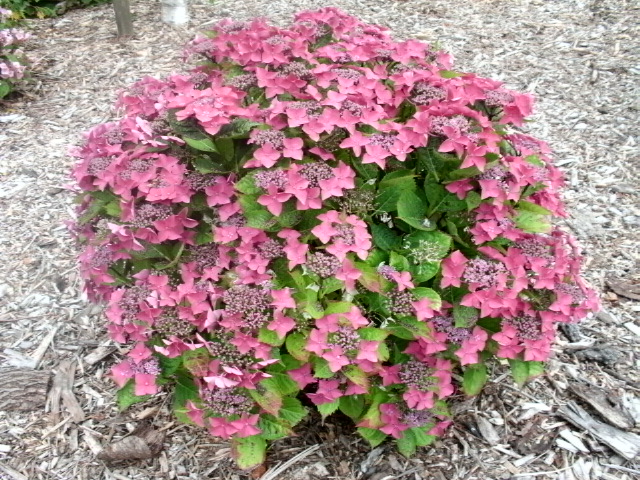
We visited Hydrangeas Derby today 


Every home should have a hydrangea.  There are so many types, hydrangeas look so wonderful and flower for quite a long time.  And they don't need much care and maintenance. 

https://www.rhs.org.uk/advice/profile?PID=516

http://www.burncoose.co.uk/site/page.cfm?page_ref=how_to_care_for_hydrangeas

Hydrangea Derby was set up in 2010 by the Friends of Darley Open Spaces (FoDOS) to assist Derby City Council to maintain and extend this already large collection of Hydrangea.  It’s the largest in the UK and the third largest in the world!


see: http://hydrangeaderby.co.uk/


Thursday, 20 August 2015

Renishaw Hall today, although it looks rather dull in these photos it was lovely and warm.  
The hydrangeas, roses and clematis were particularly stunning.  And the tea room wasn't bad!

http://www.renishaw-hall.co.uk/


Tuesday, 28 July 2015

We went to a very soggy, damp RHS Tatton Park Flower Show this weekend (https://www.rhs.org.uk/shows-events/rhs-flower-show-tatton-park).  
Tatton Park Flower Show as a title really doesn't do it justice.  It's really much more than just a flower show - although the floral displays are amazing.  Here is a tiny selection of photos of some exhibits .... and you can imagine the wonderful perfume in the floral displays tent!


There were several show gardens, both small and larger.
Image result for reflecting photonics garden university of southampton, tatton park
As 2015 is the International Year of Light, we particularly enjoyed looking at the Reflecting Photonics Garden (supported by the University of Southampton).  

To quote 'the 21st century will depend as much on photonics as the 20th century depended on electronics." UNESCO).  The design of the garden was inspired by the design and concept of cutting edge  

At Lunchtime it was incredibly cold and breezy - and pouring with rain.  More like October than the end of July!  So we took shelter in the cookery dem area, mainly because it was under cover, although it was still absolutely freezing.  

Image result for bake off winner at tatton parkThere was an excellent demonstration by recent 'Bake Off' winner, Luis Troyano who was an excellent demonstrator and very personable.  I can see why he was the winner.  He made baking look straightforward and fun.


Image result for wythenshawe food projectThen I started eating my packed lunch and on came the Wythenshaw Food Project team (Real Wythenshaw).  
Image result for wythenshawe food project
Their aim, with the help of several years' lottery funding help, is to get the folks of that area growing, cooking and eating well.  They showed that eating good, nourishing food needn't cost a lot, or take up buckets of time. 

Out of many entries, they have now reached the final seven for   the Best Environment Event with the National Lottery: https://wythenshawereporter.wordpress.com/ (voting is til 29 July); and also see  http://www.communitieslivingsustainably.org.uk/project/manchester-international-festival/


We saw Field to Fabric - a garden inspired by the Lancashire textile industry, in conjunction with the WEA, Lancashire County Council and the Lottery.  Then I went into their tent where there were several displays of WEA members' work and tried my hand at decorating a felted bird.  Something it would be nice to do with our U3A Craft Group some time.  Here are some of their projects:
http://www.nw.wea.org.uk/fieldtofabric


Ena Harkness
We've had trouble growing roses at our previous two homes so were interested, now that we have 'better' soil (clay, better for anything?!) to see what was around.  I noticed three companies in particular: Hardys in Hampshire (http://www.hardys-plants.co.uk/); Harkness (remember the famous 'Ena Harkness rose?) (http://www.roses.co.uk/); and Austens (http://www.davidaustinroses.co.uk/english/advanced.asp).
Reaseheath College  (http://www.reaseheath.ac.uk/) was well represented with representatives of the college on hand to give out information and their garden reflected very much the courses they offer.  It represented an exploration of the structural layers of a leaf, represented by the plantings and sculptures.
Image result for reaseheath college tatton park 2015