Showing posts with label food. Show all posts

Saturday, 19 July 2014


Do you remember the 'I'm backing Britain' campaign in the late 1960s?


I'm Backing Britain was a brief patriotic campaign aimed at boosting the British economy.  It flourished in early 1968 when economically the country was in quite a bad way, in fact so bad that the pound had been devalued the previous year in an effort to make exports from this country more viable.
The I'm Backing Britain campaign started spontaneously when five Surbiton secretaries volunteered to work an extra half an hour each day without pay in order to boost productivity, and urged others to do the same. 
This invitation received an enormous response and a campaign took off spectacularly, becoming a nationwide movement within a week.  

Unfortunately, when the good times returned people's resolution to back Britain waned somewhat.  
Instead of eating local seasonal food, we became accustomed to enjoying all foods all year round.  
Often these foods were imported from many thousands of miles away, when we could have enjoyed locally grown food, but only in season.  
I think that if we eat something all year round then we don't appreciate it so much as if we only are able to enjoy something for a short spell each year.  
And somehow following the seasons brings a rhythm to the year, which is more comfortable, and keeps us in tune with nature.  
More importantly, local foods in season taste so much better.

To bring the idea of I'm Backing Britain more up to date, here are the top four reasons to buy British food ...
  1. Buying food and drink that has been produced in the UK not only adds to the overall growth of the nation's economy, it also keeps smaller, more local businesses alive.
  2. Farmers help maintain the beautiful countryside: from protecting wildlife to repairing fencing and hedgerows, the scenery we enjoy is crafted largely by them.
  3. Supermarkets that use British farms are able to build up personal relationships with their suppliers and visit their farms on a regular basis to ensure top quality.
  4. Many people think locally produced food tastes better.  Crops are picked at their peak and there's no time wasted having produce flown or shipping in from overseas.

Also see: 
http://www.bbc.co.uk/news/magazine-15551818
and
http://britishfamily.co.uk/im-backing-britain/

This is a table of when to buy home-grown food:

Monday, 16 June 2014

Don't wash chicken before cooking - new guidance warns*

Now that people have taken on board official advice about how to cook chicken safely and thoroughly, so that the juices run clear and the flesh is steaming hot, but who knew you should never wash raw chicken?

Research from the Food Standards Agency shows that before cooking chicken, just under half of us do exactly that - often because our mothers did, or because we think it will get rid of 'germs'. 

But according to the FSA, washing raw chicken can lead to a potentially dangerous form of food poisoning caused by Campylobacter  bacteria, with contaminated droplets of water likely to spread the bus onto work surfaces, clothing and cooking utensils.

Campylobacter is the most common cause of food poisoning in Britain, accounting for about 280,000 cases annually - more than Salmonella, E.coli and Listeria put together.

The main route of infection is through food and drink and the most common source is contaminated poultry.  It's spread to humans by undercooking, but also by practices such as washing raw chicken.

It's easy to dismiss food poisoning as a common, usually mild affliction, but it can be a harrowing illness which can cause indescribably pain, inflammation and blood in the stool.

Nor do you need to consume many of the microbes to get infected: 100 organisms, compared to 10,000 of salmonella. 

Those most at risk are the elderly, the under-fives and people taken antacid medication, which eliminates stomach acid that protects against infection.


This infection can have long-term effects, with up to a quarter of sufferers developing irritable bowel syndrome; and it can also send the immune system into overdrive so that it attacks nerve cells, leading to arthritis and, in one-in-1,000 cases, a severe form of paralysis called Guillain-Barre syndrome.

One person who contracted this syndrome spent seven weeks in hospital, and was in a wheelchair for a further two years.  Although much recovered, she still has no movement in her toes and uses a walking stick.

Apparently few people have heard of Campylobacter.  Yet a survey five years ago showed that two thirds of chickens carry the bug, with more than a quarter heavily contaminated.  The FSA is pressing the chicken-processing industry to impove the production process.


The the meantime, it pays to be careful when dealing with chicken:

  • Always cover and chill (store at the bottom of the fridge, the coldest part, and ensure it does not drip onto other foods);
  • Never wash it when raw (cooking  will kill any microbes;
  • After handling, wash hands and utensils in hot soapy water; and
  • Cook thoroughly.

You can test the juices are clear by cutting into the thickest part, near the leg, with a skewer or sharp knife.

(FSA website: http://www.food.gov.uk/ and also see: http://www.hlntv.com/article/2013/09/05/dont-wash-chicken)

* from Daily Telegraph, June 2014

Sunday, 26 May 2013

Rewriting the restaurant rule book

We need to think about how, and how often, we eat out, according to Michael Pollan.


Can't be bothered to cook?  We all feel like that sometimes.  The solution (funds permitting) used to be so simple. phone for a reservation and head to a restaurant.  Job done.  

None of the tedious kitchen slavery, none of the guilt about whether we've shopped local or bought organic or Fairtrade.  And while takeaways have a reputation as waiting rooms for bypass surgery, restaurants are real cooking so it's practically as healthy as homemade, right?

Not according to Michael Pollan.  He believes it's time for us to pay attention to how we eat out, as well as how we eat in.  In his new book The Food Rules (http://www.webmd.com/food-recipes/news/20090323/7-rules-for-eating) it's time for us to pay attention to how we eat out, as well as how we eat in.  He has made a list of seven (simplistic) guidelines for making good food choices:

Dig doggy bags:  Restaurants serve supersize portions to make you feel you're getting your money's worth.  If there's enough for another serving, ask them to wrap it to go - so you really will be getting your money's worth.
Seasonal menues: Don't eat at restaurants that serve asparagus all year round (or strawberries). The chef's not paying attention to the seasons and it's unlikely the food will be special.
Small suppliers: The smaller the delivery truck out at the back, the better the food inside will be. If a restaurant is getting its ingredients delivered by articulated lorry, the food is apt to be undistinguished.
Name that farm: Look on the menu for names of specific farms, not meaningless generic pastoral terms like 'farm eggs', which means nothing.
Specials are special: If there are daily specials order them. They often mean fresh ingredients and thoughtful preparation.  But if the waiter doesn't tell you the price, ask - sometimes specials can carry special prices as well.
Don't order steak well done: Chefs typically serve the gnarliest pieces of meat to people who order well done, either out of a lack of respect or because overcooking covers a multitude of problems.  They serve the nicest cuts to patrons who order rare.  If you want well done, order it rare and send it back for more cooking.
How meat is raised matters:  Don't eat meat in restaurants unless the menu specifies that the animals were sustainably and humanely raised.  In the case of ruminants, look for terms like grass-finished or pasture-raised.


From: Cooked by Michael Pollan (Allen Lane, £20). Article by Xanthe Clay in Sunday Telegraph, 26 May 2013.

Michael Pollan: http://www.guardian.co.uk/lifeandstyle/2013/may/25/michael-pollan-family-meal-civilisation

Tuesday, 22 January 2013

The benefits of synergy

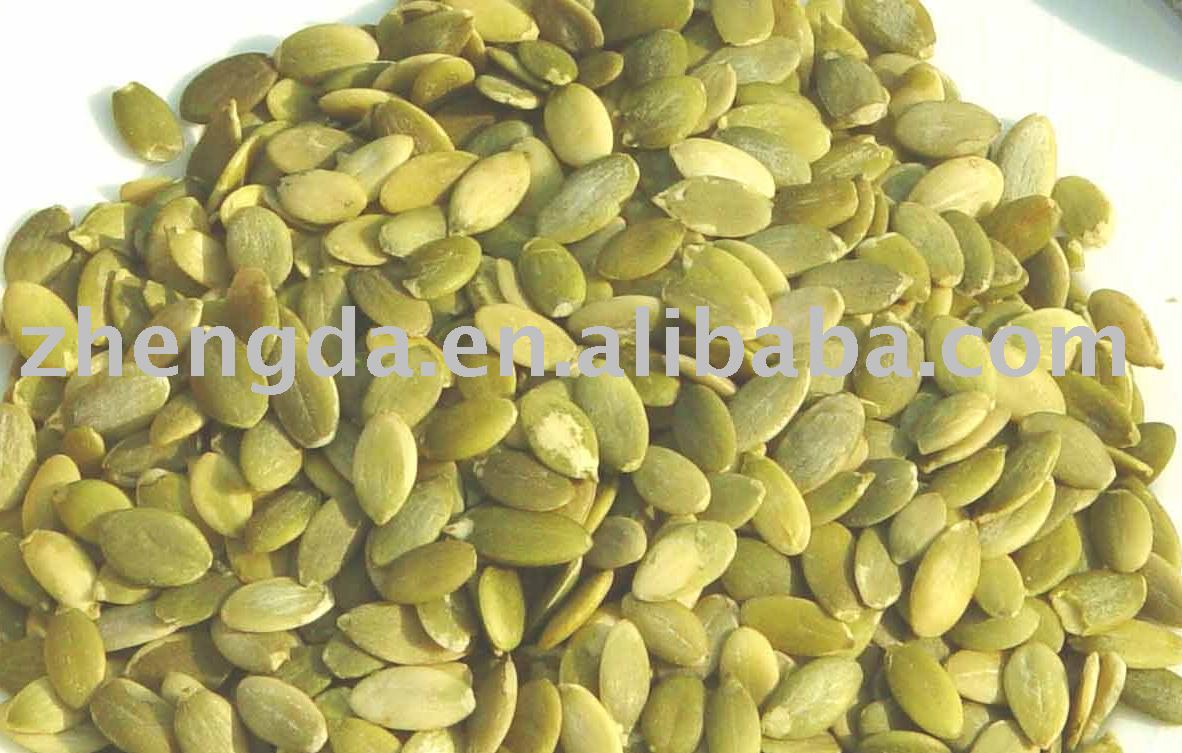
Forget the pork scratchings and peanuts.  Next time you down a pint of beer, make sure there's a small pile of pumpkin seeds near by.  This may not sound like a very macho combination to be knocking back in your local, but pumpkin seeds are a rich source of zinc, a mineral that will support the bladder and the kidneys and help protect them from the stress of processing several pints.


Grapefruit may already feature on your breakfast menu, but few people know that if you add a segment to a cup of antioxidant-rich green tea and then dissolve a teaspoon of organic maple syrup into the drink, you'll be giving your whole system a boost.  Green tea can help break down fats in the body, and its potency is enhanced by the active ingredients in grapefruit.  Maple syrup is a rich source of all the minerals needed to support your whole system.


The process of looking at foods that work together in the body to promote good health is called synergy and, while much of the evidence for its effectiveness remains anecdotal, science is starting to prove it works.

Synergy is fascinating too, because we already know many of these combinations - thanks to granny.  There can hardly be a meat-eater in Britain, for example of hasn't eaten roast beef with horseradish sauce.  The active ingredients in the horseradish actually help the body to break down layers of connective tissue in the meat into a more digestible form.

Any self-respecting pizzeria will have garlic bread on the menu.  The sulphur in the garlic helps to deactivate any possible yeast activity in the bread - which is good news for anyone who has been avoiding bread after being diagnosed with a common yeast infection such as Candida albicans (thrush).  Add garlic and you can, occasionally, have a treat.

Apparently, food intolerances can play a role in conditions such as acne, eczema and rosacea.

It is important to maintain the best acid/alkali balance.  When this is thrown out it can adversely affect the skin, the digestive tract and other systems in the body. If the internal balance is disrupted, it will affect the external balance, which is just as important for keeping bacteria out and fighting off those that cause infections, such as acne.

Acidity and alkalinity are measured according to the pH scale. Water, with a pH of 7.0 is neutral - neither acid nor alkaline.  A pH below this is acidic, and anything higher is alkaline.  The human body is mildly acidic, to resist infection - its ideal pH is beetween 6.0 and 6.8.


Acidosis is the term for when the body chemistry becomes overacidic.  As well as skin and digestive disorders, symptoms can include insomnia, migraines, low blood pressure, irritable bowel syndrome and rheumatoid arthritis.  The causes include kidney, liver and adrenal disorders, improper diet, obesity, stress, medication and the absorption of other chemicals, and anorexia.  Many diabetics suffer from acidosis and stomach ulcers are frequently linked with it.


  • Sugar, coffee, fish, chicken, olilves, noodles, eggs and alcohol are all acid-forming foods.  
  • Fresh vegetables, coconut, maple syrup, honey, raisins and soy products are all alkaline-forming foods.

You can test your own acid-alkalinity levels with a simple litmus test, using pH paper from any pharmacy.  Test saliva or urine, and watch red litmus paper turn blue if your body's fluids are predominantly alkaline.  Blue litmus paper will turn red to indicate acidity.  Perform this test one hour before or after eating and adjust yur diet.  If you're worried by the result, consult a qualified nutritionist.

For vegetarians and those avoiding food groups because of an intolerance, food partners take on a more significant role.  These people have to lean to combine certain foods carefully to make the complete proteins, vital for energy, that may be missing from their diets.

Proteins are made up of amino acids.  There are 22 of these, 14 of which the body can make.  The other eight, called the essential amino acids, must come from diet.  Animal and dairy products provide all eight, but plant foods do not. 

A possible dietary shortfall can be compensated for with clever food combining.  Cashew butter on wholegrain bread, for example, will ensure an intake of all eight essential amino acids, as will vegetables with parmesan cheese.

So, a balanced diet is about much more than watching the scales.
Well matched
If you combine foods correctly, you can maintain the right acid-alkaline balance int he body and vegetarians can ensure that they get complete proteins from a non-meat or fish diet.  The following foods go particularly well together:


Apple with pumpkin seeds
Beer and pumpkin seeds
Bread and garlic
Cheese and mustard
Chocolate and pears
Cow's milk and nutmeg
Wine and walnuts
Curry and almonds
Peanuts and tumeric
Grapefruit and green tea/maple syrup
Oranges and sunflower seeds
Strawberries and mango

Also try
Mushrooms and nutmeg: as nutmeg is antibacterial and will counter the effects of any infection lurking in the bacteria-prone fungus; 
spicy foods and almonds: all nuts and seeds have alkaline properties and will neutralise the acidity of a spicy dish;
cardamom pods and coffee: because the spice neutralises the acidity of strong coffee.